Author(s) : Alexandra Knezevic
Author Archives: Jean Eric PELET
Responsive Web Design
Author(s) : Ethan Marcotte
The Responsive Design
Internet, and its interface is growing very rapidly and create innovations every day. However, they must confront regularly to various constraints.
We can now ask how the web, this new platform is based on our knowledge? But also how a site fits our various tools such as smartphone or tablet?
These two hypotheses will help us to develop the concept of "Responsive Design".
On the one hand "The Web", this new digital world has its own codes. However, its principles are derived from real domains.
1. In a first step, we will look to its interface
The creator of the website has to choose his own canvas in order to spread its "desires", his work as an artist who expresses his emotions. The word "canvas" retains its full meaning here, we can even extend its sense and compare the "web" to a "cobweb" because it is composed of yarns that make up the network. This thread will allow the spider to catch its prey and live. The canvas of this website approaches this significance because the creator of a website will make every effort to ensure that his site is attractive and should be the subject of targeted research. That will generate the flow. Having special offers, they will push the consumer to buy. The site will live with his income.
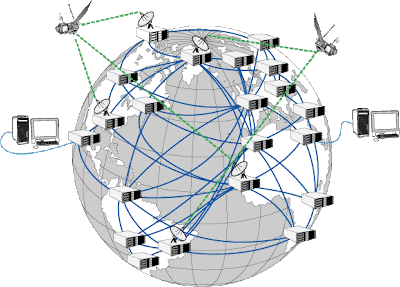
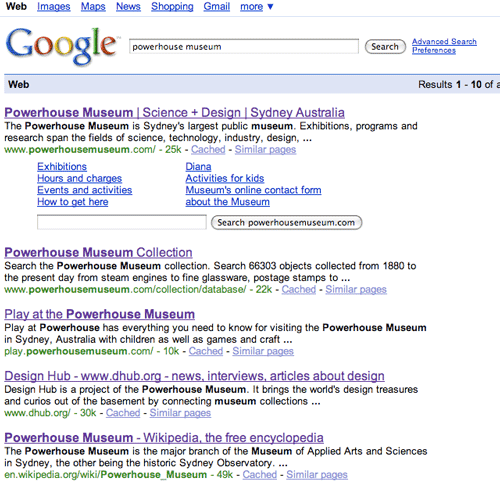
- In addition, we can see that in a website, there are: titles, headings, paragraphs, etc.. These words impose real code to this flexible surface. By imposing this, website’s creators allow the user to simply understand their digital platform. The user will know by a a glance the theme of the site with his name, he has a brief description in the search page and will even offer to click on "sub-categories". This can be compared to a book, when the title is vague, the reader have to read the back cover to quickly understand the theme of his book. Here, the principles of the printing are applied.

2. Now we will look at the construction of the website to be visible by any tool.
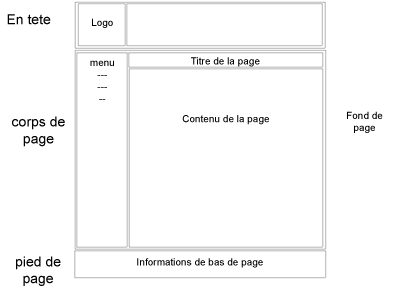
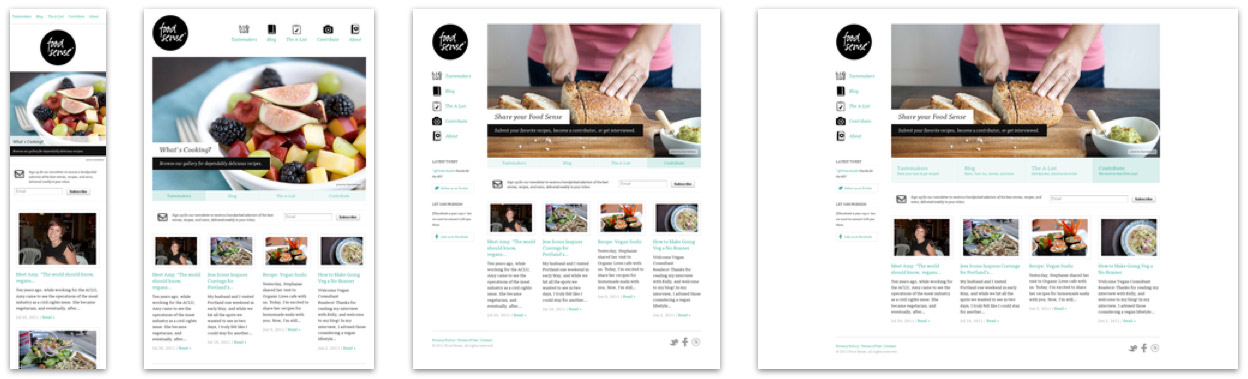
- The interface of a website is composed of headings, columns, tabs, banners etc.. All this, is set up through the work of webdesigner. He has a role of architect but specializes in ergonomics, aestheticism’s websites. Previously internet was dedicated "solely" to computers. Therefore, each page website could have a larger or smaller size according to the screen type and its resolution. It should be flexible in order to adapt to each screen to avoid bad ergonomics. It’s necessary that the user finds the site "fun" to watch. For example: if the site is improperly sized, the user must scroll the page from the left to the right in order to have a global vision of the site. This will be unpleasant, and he will leave very quickly the website.
There were in 2011 about 40 million users (Fevad, 2011) in France. Knowing that 12% of French (= 3 million) have already made purchases from their mobile. This figure is small today but tends to develop in several years. For this reason adapting a website for mobile and tablet is a real challenge, especially in terms of development for the company and optimization.
We will develop the concept of "Responsive Design".
- A website is "Responsive" when it adapts to any screen (resolution), either a computer screen, smartphone or tablet.


- The user must be able to navigate without a problem. When this is not effective, the user can not feel any pleasure and will be restricted. Some web designers decided to create a website for each tool, but when users want to share the mobile URL with a friend or colleague who receives it in his mailbox. He will be confronted with the ergonomics "mobile" on his computer. Reading the site will require more effort for the person and she will be incommoded by the format.
- Then, the site is "Design" because in addition to adapt to any type of resolution, it must be ergonomic. The navigation will be different between a computer and a smartphone. Thus, columns, headings and other tabs have a different position. It is necessary for user interface is attractive, but also ergonomic.

Finally, by joining the two words: "Responsive + Design" we access a concept that simplifies the user experience and enables businesses to be seen and read anytime, anywhere.
The Ultimate Email Marketing Guidebook Increasing Subscriber Engagement
Author(s) :
Vital Checklist for Website Redesign.pdf
Author(s) :
How smartphones and tablets are shiftingmedia consumption
Author(s) : Linda Abraham, CMO comScoreRené Schuster, CEO Telefónica Germany

Download the presentation (need to be logged with an google account)
CONNECTED EUROPE
As presented in this report, today’s digital environment is evolving in Europe, helped by the rise of devices people use to consume content at home, at work and means of transport. Not too long ago, European consumers depended only on their desktop computer or laptop to connect to the internet at work and at home. Today, a growing number of consumers are greatly helped to access a variety of digital content across a multitude of devices like tablets and smartphones.
Keywords :
- The Rise of smartphones and tablets (42% smartphone penetration in UE5 and 39% in USA)
- Key Players in the fragmented mobile ecosystem (Google’s Android, Apple IOS, Nokia’s Symbian)
- Mobile Media is booming (75% of smartphone users in the EU5 used mobile media in October 2011, an increase of 62% in the past year.)
- Mobile commerce increase (Mobile retail is one of the fastest growing phenomena amongst smartphone users)
ANDROID GOES MAINSTREAM
TABLETS NOT JUST FOR MOBILE USERS
APPLE ECOSYSTEM TAKES TOP SPOT FOR TOTAL DEVICES IN USE
In the Tablet market Apple with IPAD leading the market followed by Android and Microsoft (Windows system for tablet).
MOBILE LEADS BUT TABLETS GAINING STEAM
EU5 region computer usage accounted for 95.1% of all browser based page views,with mobile devices (3.2%) majority of the 4.9% of non-computer traffic, 1.4% of digital traffic for tablets, and 0.3% to other connected devices such as games consoles.
France and Italy had the lowest share of traffic coming from non-computer devices, with 2.4% of non-computer traffic with mobile and tablet devices.
TABLET USAGE SPIKES AT NIGHT
DEMOGRAPHIC PROFILE
SMARTPHONES OPEN UP A WHOLE NEW WORLD FOR CONSUMERS
Conclusion :
We can also said that consumers will continue to expect mobile commerce as a fact of life and will only accelerate their usage of mobile devices to conduct commerce transactions, that’s why e-commerce is a growth sector and i think is going to be with us for a long time thanks to new devices like tablets and smartphones.
Digital marketing in the arts
Author(s) : Stephanie Challener

Is a symphony orchestra the most famous Americans. The orchestra launched the first webcast that was broadcast around the world in April 2010. Then in October 2010, the DSO has developed mobile applications for Android and iOS devices. This allowed their first concert webcast Pops.The goal is to use technology live web streaming in the framework of a broader marketing strategy and become "the most accessible orchestra on the planet, visible as possible by anyone anywhere" said Scott Harrison, senior director of patron engagement and loyalty and also general manager for digital media. "The DSO has achieved 25% of ticket sales through the website," according to Scott Harrison. Digital Marketing was therefore a very high return on investment. The advantages of digital media marketing growth in ticket sales and recruiting more subscribers.
Indianapolis Symphony Orchestra
When it began in a quest to expand beyond its main customers. "The campaign was designed to reach audiences through digital media social media marketing, mobile communications and the Internet," said Mark Newman, Vice President of Marketing and ISO communications.Social media, e-mail, website and applications for smartphones are at the heart of marketing efforts ISO."Email marketing provides a constant stream of ticket sales," says Newman. Nearly 40% of ticket sales take place online and track the sales back to the mailing.The email is as one of the main ingredients of the marketing mix to increase ticket sales, let your audience know of upcoming events, and maintain contact with customers.To varying degrees, digital media have become an essential ingredient in the marketing mix of art.In the United States, arts organizations generally consider a rate of 20% open standard. And in the UK, arts organizations typically reach a rate of 30% open, but they tend to send emails less frequently.
National Theatre of Scotland
Has invited people of all ages to submit ideas for five minutes of work they could produce and perform. A 24 hours broadcast games five minutes throughout Scotland, United Kingdom and elsewhere, some pre-recorded and played some live "live web" in time slots specifically designated. Within 24 hours, 1,000 participating artists received 22,000 views on the web from 6300 people in 51 countries. Mini-shows were also posted on the YouTube channel individually; bringing to 26,000 other views and continues to climb.
Conclusion
Consumers are spending more and more time on social media at the expense of other media. This change in behaviour required an adaptation of professionals to communicate their messages and reach their audience. With this advent, you can think, create and perform an artistic activity through social networks ? And if yes, what manifests this art form ?
Pinterest is a good asset in a social network that allows users to view, share and discover new interests "pinning" (images or videos on their own or others’ favorites). Users can upload images from their computer or "pin" things they find on the Web using the Pinterest "Pin It" or URL.It is a way to manage a part of the proceedings lives and drive traffic to pages on a website and help the company. Early research indicates that Pinterest is more effective to generate traffic from other social media sites, even on Facebook.
Virtual reality and e marketing
Author(s) : virtual, e-marketing, e-business, reality, business, phychology, nowayland
Virtual reality and e marketing
responsive_FourQuestionsGuideWebMobile
Author(s) :

The mobile demand is explosively growing and the American company Forrester forecasts that by 2015 in the USA alone there will be 159 million smartphones and 82 million tablets in use. It is therefore necessary to develop the mobile content which will require not only time, effort and money but also new skills, processes and in some cases even new technology will be necessary.
To make these processes a lot of easier for the organizations and to not waste too many time the Four Questions Guide was developed to manage the web mobile content.

The use of device-agnostic means that there a fewer templates to manage and it’s easier to maintain presentation and brand consistency. But the disadvantages are that there is an increased chance mediocre experience and the use of device-agnostic doesn’t allow taking advantage of device-specific characteristics. Because the advantage of device-specific is a better customer experience. In contrast to device-agnostic, device-specific has the ability to take advantage of device-specific characteristics. But therefore there are more templates to manage and it’s harder to maintain presentation and brand consistency.
A power and business user friendly approach is better when presentations have a great number of variations. This is given with WCM vendors like for example Adobe or SDL who allows creating global content and presentation elements in order to manage families of presentation templates that support traditional web, smartphones, tablets and other devices. But if there are fewer variations between presentations and developers maintain those variations, it’s better to use fewer presentation templates and manage device-specific requirements.
Already today WCM vendors allow to manage traditional web and mobile experiences within the same the content management and development environment. But not every single portions of a company’s website may be delivered via one same WCM, that’s why WCM-based mobile functionality may only work for a portion of a website.

Virtual reality and e marketing
Author(s) :
Virtual reality and e marketing
LB Smile Référencement
Author(s) : Pierre Barthélemy