Author(s) : Jean-Eric PELET
Students are encouraged to register on each of these social networks: Facebook, Twitter and LinkedIn in order to understand the course with more accuracy.
Objectives
- Students will understand why the economy increasingly moves towards a knowledge based economy, and get the ability to manage knowledge becomes a matter of competitive survival.
Description
- as a strategy for business,
- as a medium to increase effectiveness, efficiency, and competitiveness,
- as a technique across a range of different kinds of missions which influence how businesses operate today.
Objectives
Intended Learning Outcomes:
Question for marketers
Keywords
Knowledge management, Intellectual Capital management, User Generated Content, managerial needs, intangible assets, case study.
Programming
- Introduction to knowledge management
- The nature of knowing
- Intellectual capital
- Strategic management perspectives
- Organisational learning
- The learning organisation
- Knowledge management tools: component technologies
- Knowledge management systems
- Enabling knowledge contexts and networks
- Implementing knowledge management
Evaluation: theoretical and practical
The weighting of each assessment activity is indicated in the table below:
| Theory: Synthesis of an academic paper | Practice – Creation of the CMS | Practice – Participation to the main platform | Total |
| 33% | 33% | 33% | 100% |
In practice
- Web2.0 tools are discussed and implemented on each website created by groups of students. A description of the knowledge management platforms will help students to build their knowledge management strategy efficiently;
- Readings of up to date research papers dedicated to knowledge management will provide a deep understandings of the materials covered during the lectures.
Objective
- You are warmly encouraged to read this chapter in order to understand the whole lecture:
- Pelet J.-É. (2010), Using Web 2.0 Social Computing Technologies to Enhance the Use of Information Systems in Organizations, IGI Global, pp.101-132, DOI: 10.4018/978-1-61692-904-6.ch007, http://bit.ly/fJVhWI
- Following the example of this chapter, you are required to build a Content Management System platform related to the following topic: Knowledge Management and to one of the themes of your choice.
- Number of students for one platform: 4
Method
-
A Knowledge Management platform about Knowledge Management is under construction on this website: http://knowledgemanagementforall.wordpress.com/
-
Students make groups related to one theme of their choice to make it growing by addition of content
-
Each student is asked to chose a topic among the following to make the website growing
Themes:
-
Enterprise 2.0,
-
Collaboration,
-
KM conversations,
-
Knowledge Management,
-
Knowledge,
-
Knowledge sharing,
-
Innovation,
-
Design,
-
Research,
-
Social media,
-
Business,
-
Mobility,
-
Strategy,
-
Social,
-
Technology,
-
Mobile phones,
-
Mobile,
-
Emerging markets,
-
Design thinking,
-
Digital activism,
-
Disruptive innovation,
-
Management,
-
Education,
-
Entrepreneurship,
-
Social network
Topics:
- Setting the Tone,
- Technology and innovation,
- KM Networking,
- Human Resources,
- Education and Financial Perspectives in KM,
- KM Standards, Regulations and Tools/Techniques,
- KM Applications in Organizations
These topics reveal to be useful in order to create CMS related to them
-
The CMS of each group must be connected to websites related to the same topic, using RSS links or widgets, linking their content to student’s posts
-
Groups choose a responsible of their platform and manage to prepare it according to the chosen topics.
-
Groups of students must provide RSS links of their own group platform to the responsible once their synthesis is done
-
This drawing summarizes what is expected:

Figure 1 : presentation of the projectEach group has to create its pages on the platform related to the chosen topics
Figure 2 : presentation of each group
- Explanation and definition of the topic
- Presentation of the topic described among the pages on the platform
-
Identification / presentation of themes
-
Importance of the subject in relation to knowledge management
-
Presentation of the Text / Sites listed / RSS found
-
Insertion sites within a del.icio.us account
-
Write short summaries of the sites / texts / rss
- In order to gain an in-depth understanding of a topic of interest, the student committed to Knowledge Management, will choose an article to synthesize it.
- This article can be chosen:
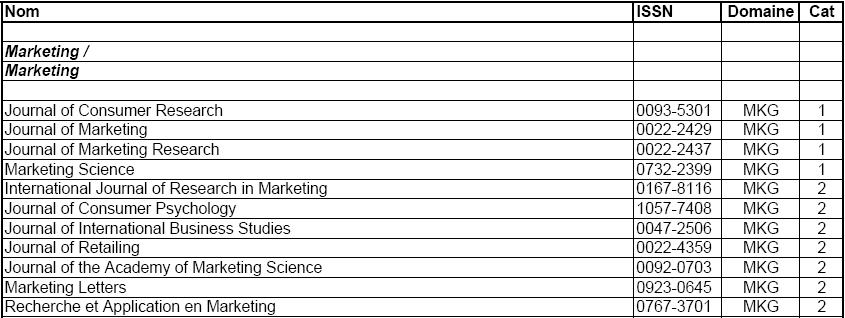
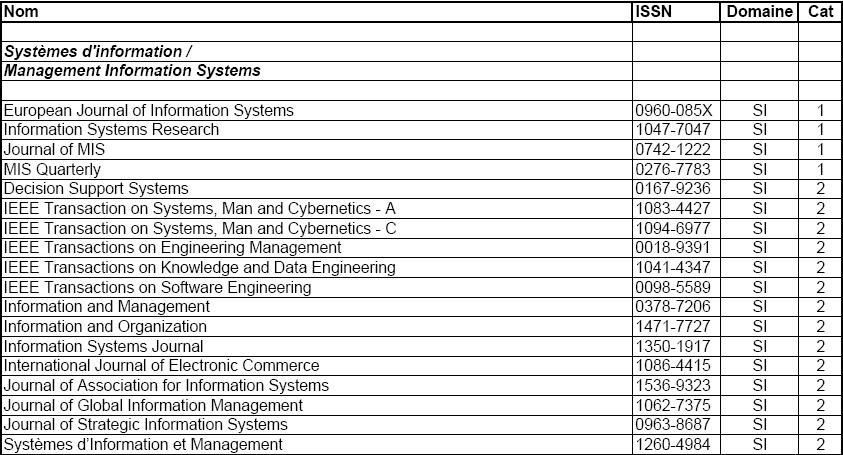
- Among recent publications from top ranked journals (A* and A only) issued from Marketing databases
- From articles delivered by the lecturer.
- A literature review,
- hypothesis,
- results,
- bibliographical references used in the synthesis.
- This work will appear on the Content management System of the group the student takes part of, in order for the other students to read the works of their colleagues and eventually grade it. Students will also print this synthesis to get graded by the lecturer.
- Choose an article among the following one (go to the page)
- Write the title in front of your name on this page (clic here)
- Write a synthesis following this model and copy paste it from Word to the platform of the classroom by creating a post: one post for one synthesis of article
- All the necessary guidelines to write this synthesis are summarized on this page: Writing the synthesis of an academic article
Multimedia content is VERY welcome (pictures, videos, sounds, presentations, etc
In theory
This synthesis of 2-pages (A4 format) is a summary of this article, mentioning what looks most important to you. It necessarily contains:
Course methodology
- Class lecture and discussions
- In and outside of class team/individual participation to the course knowledge management
- Team projects and presentation
- Individual research paper
- Outside of class reading/participation to the platform of the lecture
- Popular Website visits (in and outside of class)
Individual research paper
- The paper should be an independent piece of research work based on a critical analysis of secondary research written in the form of a publishable journal article outline, accompanied by at least five references of key source material contributing to the article.
- The paper should be on one of the chosen topics from the theme of E-Marketing Environment and should clearly outline a research context, define a specific research problem, outline challenges and opportunities presented by the issue to marketers, provide a comprehensive theoretical background and rationale, and outline some marketing implications and recommendations.
- (Examples would be the implications of the internet landscape in certain emerging economies; issues around country and market attractiveness for e-marketing; issues and challenges around converge of certain types of technologies; issues around the digital divide; issues around certain ethical and legal challenges; issues around ownership of internet and content etc.)
Team Projects
- Student teams comprised of approximately 3 students will be assigned several tasks such as developing a knowledge management plan for an organization that does not yet use the online environment, such as the traditional brick and mortar companies;
- Each team will be required to turn in a detailed paper and complete individual and peer evaluations;
- All these projects must be created on websites so your colleagues are able to watch it;
- Each group will be required to develop an individual website.
- Guidelines for these websites will be posted on the platform class website.
- A number of online providers offer free websites and offer detailed instructions on how to complete this website.
- This assignment can also be completed in any number of HTML editors (Microsoft FrontPage, Dreamweaver, etc.).
- However, these programs will not be covered in class so students will have to learn one of these programs on their own.
- A link to your Web Site must be submitted electronically via email.
Classroom Courtesy
- Since every student is entitled to full participation in class without interruption, all students are expected to be in class and prepared to begin on time. Please be considerate of fellow classmates and turn off all beepers, pagers, cell phones, etc. Students involved in discourteous behavior, rude/unnecessary comments, talking during class, sleeping, and other disruptions will not be tolerated (you will be required to leave).
- Laptops will only be permitted if used for in-class note taking. Cell phones should also be out of sight while in class (and absolutely no text messaging).
Learning and Teaching Activities:
- Lecture style presentations will introduce students to theoretical underpinnings in course content. Seminar sessions will include case study interrogation, in-class presentations, class discussions, and audio-visual material (where appropriate) and will reinforce theoretical learning, foster application and analysis skills in enabling students to choose and discuss appropriate international marketing strategies and tactics. Online support will be available for disseminating teaching, learning, and assessment materials and for facilitating student discussion and feedback.
- In line with the KMCMS’s Equal Opportunities Service policy, all appropriate support will be provided to meet the needs of differently-abled students including adaptation of learning materials where appropriate.
- Students will be required to keep up with all the learning and teaching activities in order to successfully achieve all the mandated learning outcomes. The module will require considerable student input of independent reading and preparation daily to keep up with prescribed reading.
Course Materials
Textbook
Jashapara, Knowledge Management: An Integrated Approach, 2nd Edition, © Pearson Education Limited 2011
Bibliography
- Alavi, M., & Leidner, D. E. (2001). Review: Knowledge management and knowledge management systems: Conceptual foundations and research issues. MIS Quarterly, 25(1), 107-136.
- Aldridge, A., Forcht, K., & Pierson, J. (1997). Get linked or get lost: Marketing strategy for the internet. Internet Research: Electronic Networking Applications and Policy, 7(3), 161-169
- Argyris, C. (1990). Overcoming organizational defenses: Facilitating organizational learning. Boston: Allyn and Bacon.
- Bacharach, M., & Gambetti, D. (2001). Trust in signs. In K. Cook (Ed.), Trust in society (pp. 148-184). New York: Russell Sage Foundation.
- Bergin, J. (2002). Teaching on the Wiki Web, ACM SIGCSE Bulletin, 34(3), 195.
- Bernoff, J., Pflaum, C. N., & Bowen, E. (2008, October 20). The growth of social technology adoption: 2/3 of the global Internet population visit social networks. Cambridge, MA: Forrester Research. Retrieved from http://www.forrester.com/Research/Document/Excerpt/0,7211,44907,00.html
- Bhatt, G. (2000). Information dynamics, learning, and knowledge creation in organizations. The Learning Organization: An International Journal, 7(2), 89-98.
- Choo, C. W., & Bontis, N. (Eds.). (2002). The strategic management of intellectual capital and organizational knowledge. New York: Oxford University Press.
- Cotter, S. (2002). Taking the measure of e-marketing success. Journal of Business Strategy, 23(2), 30 – 37.
- Coviello, N. E., Milley, R., & Marcolin, B. (2001). Understanding IT-enabled interactivity in contemporary marketing. Journal of Interactive Marketing, 15(4), 18-33.
- Damanpour, F. (1992). Organizational size and innovation. Organization Studies, 13(3), 375–402.
- Davenport, T. H., & Prusak, L. (1998). How organizations manage what they know. Boston: Harvard Business School Press.
- Donath, J. (2007). Signals in social supernets. Journal of Computer-Mediated Communication, 13(1). Retrieved from http://jcmc.indiana.edu/vol13/issue1/donath.html
- Drucker, P. F. (1988). The coming of the new organization. Harvard Business Review, 66(1).
- Dunbar, R. I. M. (1996). Grooming, gossip, and the evolution of language. Cambridge, MA: Harvard University Press.
- Dunbar, R. I. M. (2004). Gossip in evolutionary perspective. Review of General Psychology, 8(2), 100-110.
- Eisenhardt, K. M., & Brown, S. L. (1999). Patching: Re-stitching business portfolios in dynamic markets. Harvard Business Review, 78(1), 91-101.
- EMarketer. (2007, June). User Generated Content: Will Web 2.0 Pay its Way?
- Fahey, L., & Prusak, L. (1998). The eleven deadliest sins of knowledge management. California Management Review, 40(3).
- Foremski, T. (2005). If Internet 1.0 was a disruptive technology…where is the train wreck? SiliconValleyWatcher. Retrieved February 21, 2005, from http://www.siliconvalleywatcher.com/mt/archives/2005/02/if_Internet_10_1.php
- Garrison, D., & Anderson, T. (2003). E-learning in the 21st century: A framework for research and practice. London: Routledge.
- Godin, S. (2009). Seth Goodin’s blog. Retrieved from http://www.sethgodin.com/
- Goffee, R., & Jones, G. (2001). Followership: It’s personal, too. Harvard Business Review, 79(11), 148-149.
- Good, D. (2000). Individuals, interpersonal relations, and trust. In D. Gambetta (Ed.), Trust: Making and breaking cooperative relations (pp. 31-48). Oxford, UK: University of Oxford Press.
- Grant, R. M. (1996). Toward a knowledge-based theory of the firm [in Special issue: Knowledge and the Firm]. Strategic Management Journal, 17(2), 109-122.
- Granovetter, M. S. (1983). The strength of weak ties: A network theory revisited. Sociological Theory, 1, 201-233.
- Gupta, K. S. (2008). A comparative analysis of knowledge sharing climate. Knowledge and Process Management, 15(3), 186 – 195.
- Gupta, K. S. (2001, July-September). Knowledge management and empowerment: A conceptual relationship. Udyog Pragati, 25(3), 28-35. Bombay: NITIE.
- Herbig, P., & Hale, B. (1997). Internet: The marketing challenge of the twentieth century. Internet Research: Electronic Networking Application and Policy, 7(2), 95-100.
- Hall, R. H., & Hanna, P. (2004). The impact of Web page text: Background color combinations on readability, retention, aesthetics, and behavioral intention. Behavior and Information Technology, 23(3), 183-195.
- Hill, A., & Scharff, L. V. (1997). Readability of websites with various foreground/background color combinations, font types and word styles. Proceedings of 11th National Conference in Undergraduate Research, 2, 742-746.
- Ho S. Y. (2006). The attraction of Internet personalization to web users. Electronic e-commerce markets, 16(1) 41-50.
- Hong J., Kianto A., & Kyläheiko, K. (2008). Moving culture and the creation of new knowledge and dynamic capabilities in emerging markets. Knowledge and Process Management, 15(3), 196-202.
- Horrigan, J., Boase, J., Rainie, L., & Wellman, B. (2006). The strength of Internet ties. Pew Internet & American Life Project report. Retrieved August 10, 2007, from http://www.pewInternet.org/PPF/r/172/report_display.asp
- IAB. (2008). Platform status report: User Generated Content, Social Media, and Advertising — An Overview. New York: Interactive Advertising Bureau. Retrieved April 2008, from http://www.iab.net/media/file/2008_ugc_platform.pdf
- Kogut, B., & Zander U. (1992). Knowledge of the firm, combinative capabilities, and the replication of technology. Organization Science, 3, 383-397.
- Kraemer K. L., Dedrick J., Melville N. P., & Zhu K. (2006). Global e-commerce, impacts of national environment and policy. Cambridge, UK: Cambridge University Press.
- Kujansivu, P., & Lönnqvist, A. (2008). Business process management as a tool for Intellectual Capital management. Knowledge and Process Management, 15(3), 159-169.
- Ladd, A., & Ward, M. A. (2002). An investigation of environmental factors influencing knowledge transfer. Journal of Knowledge Management Practice.
- Lamb, B. (2004). The standard wiki overview. EDUCASEUSE Review, 39(5), 36-48.
- Lee C. S. (2001). An analytical framework for evaluating e-commerce business models and strategies. Internet Research, 11(4), 349-359.
- Leuf, B., & Cunningham, W. (2001). The WIKI WAY: Quick Collaboration of the Web. Reading, MA: Addison-Wesley.
- Lev, B. (2001). Intangibles: Management, measurement and reporting. Washington DC: Brookings Institution Press.
- Levenburg, N. (2005). Delivering customer value online: An analysis of practices, applications and performance. Journal of Retailing and Consumer Services, 12(5), 319-331.
- Levitt, T. (1983). The globalization of markets. Harvard Business Review, 61(3), 92–102.
- Lindgren, R., & Henfridsson, O. (2002). Using competence systems: Adoption barriers and design suggestions. Journal of Information & Knowledge management, 5(2).
- Lönnqvist, A., Kujansivu, P., & Antola, J. (2006). Are management accountants equipped to deal with intellectual capital? The Finnish Journal of Business Economics, 3, 355-368.
- Lukka, K., & Kasanen, E. (1995). The problem of generalizability: Anecdotes and evidence in accounting research. Accounting, Auditing and Accountability, 8, 71-90.
- Mattelart, A. (1996). The invention of communication. Minneapolis: University Minnesota Press.
- McDermott, C., & O’Connor, G. (2002). Managing radical innovation: An overview of emergent strategy issues. The Journal of Product Innovation Management, 19, 424-438.
- Milgram, S. (1967). The small world problem. Psychology Today, 1, 61–67.
- Murali, R. (2009). Designing knowledge management systems for teaching and learning with Wiki technology. Journal of Information Systems Education.
- Retrieved August 27, 2009 from http://findarticles.com/p/articles/mi_qa4041/is_200510/ai_n15715725/
- Murdoch, R. (2009). Global Media Entrepreneur.
- Nardi, B. A., Whittaker, S., Isaacs, E., Creech, M., Johnson, J., & Hainsworth, J. (2002). Integrating communication and information through ContactMap. Communications of the ACM, 45(4), 89-95.
- Newell, S., Scarbrough, H., Swan, J., & Hislop, D. (1999). Intranets and knowledge management: Complex processes and ironic outcomes. Proceedings of the 32nd Hawaii International Conference on Systems Sciences. New York: IEEE.
- Nielsen. (2009, March). Global faces and networked places: A Nielsen report on social networking’s new global footprint. Retrieved from http://blog.nielsen.com/nielsenwire/wp-content/uploads/2009/03/nielsen_globalfaces_mar09.pdf
- Nielsen. (2007, October). Online global consumer study. Retrieved October 1, 2007, from http://en-us.nielsen.com/main/news/news_releases/2007/october/Word-of-Mouth_the_Most_Powerful_Selling_Tool__Nielsen_Global_Survey
- Nonaka, I., & Takeuchi, H. (1995). The knowledge-creating company. How Japanese companies create the dynamics of innovation. New York: Oxford University Press.
- OECD. (1996). The knowledge-based economy. Paris: OECD.
- OECD. (1999). S&T indicators: Benchmarking the knowledge based economy. Paris: OECD.
- OECD. (2001). Science, technology and industry scoreboard 2001: Towards a knowledge based economy. Paris: OECD.
- OECD. (2007). OECD science, technology and industry scoreboard 2007. Retrieved from
- http://www.oecd.org/document/21/0,2340,en_2649_33703_16683413_1_1_1_1,00.html
- O’Reilly, T. (2005). What is web 2.0? Retrieved from http://oreilly.com/web2/archive/what-is-web-20.html
- Pelet J.-É. (2010), Using Web 2.0 Social Computing Technologies to Enhance the Use of Information Systems in Organizations, IGI Global, pp.101-132, DOI: 10.4018/978-1-61692-904-6.ch007, http://bit.ly/fJVhWI
- Pelet, J. É., & Papadopoulou P. (2009). Consumer responses to colors of e-commerce websites: An empirical investigation. In K. Kang (Ed.), E-Commerce. Vienna, Austria: InTech. Retrieved from http://intechweb.org
- Pelet, J. É. (2008, June). Effects of the color of e-commerce websites on the memorization and on the intention of purchase of the Net surfer. Unpublished thesis. Nantes University, France.
- Pillania, R. K. (2008). Innovations and knowledge management in emerging markets. Knowledge and Process Management, 15(3), 184-185. Hoboken, NJ: Wiley Publishers.
- Pillania, R. K. (2007). Leveraging which knowledge in the globalization era? Indian facet. The Learning Organisation, 14(4), 313-320. Bingley, UK: Emerald Group Publishing Limited.
- Poon, S. P. H., & Swatman, P. M. C. (1999). A longitudinal study of small business internet commerce experiences. International Journal of Electronic Commerce, 3(3), 21-34.
- Powell, T. C., & Dent-Micallef, A. (1997). Information technology as competitive advantage: The role of human, business and technology resources. Strategic Management Journal, 18(5), 375-405.
- Raub, W., & Weesie, J. (1990). Reputation and efficiency in social interactions: An example of network effects. The American Journal of Sociology, 96(3), 626-654.
- Rapp, A., Schwillewaert, N., & Hao, A. W. (2008). The influence of market orientation on e-business innovation and performance: The role of the top management team. The Journal of Marketing Theory and Practice, 16(1), 7-25.
- Reisman, S. (2003). Electronic learning communities. Charlotte, NC: Information Age Publishing.
- Seetharaman, A., Lock, T., Low, K., & Saravanan, A. S. (2004). Comparative justification on intellectual capital. Journal of Intellectual Capital, 5(4), 522-539.
- Simeon, R. (1999). Evaluating domestic and international Web-site strategies. Internet Research: Electronic Networking Applications and Policy, 9(4), 297 – 308.
- Storey, J., & Barnett, E. (2000). Knowledge management initiatives: Learning from failure. Journal of Knowledge Management, 4(2).
- Sveiby, K. (1997). The new organizational wealth. San Francisco, CA: Berrett Koehler.
- Von Krogh, G. (2000). Enabling knowledge creation. London: Oxford University Press.
- Voola, R. (2005). An Examination of the Effects of Firm Capabilities on E-Business Adoption and Competitive Advantage: A Resource Based Perspective. Unpublished doctoral thesis. Newcastle University, UK.
- W3C. (2008). Publication version 1.1 of the AccessiWeb repository. Cambridge, MA: W3C. Retrieved June 9, 2008, from http://www.w3c.org/
- Wagner, C. (2004). Wiki: A technology for conversational knowledge management and group collaboration. Communications of the Association for Information Systems, 13, 265-289.
- Warne, L., Ali, I. M., & Pascoe, C. (2003). Team building as a foundation for knowledge management: Findings from research into social learning in the Australian Defence Organization. Journal of Information & Knowledge Management, 2(2), 93-106.
- Welling, R., & White, L. (2006). Measuring the value of Internet Web sites. Journal of Internet Commerce, 5(3), 127-145.
- Wellman, B., Garton, L., & Haythornthwaite, C. (1997). Studying online social networks. Journal of Computer Mediated Communication, 3(1). Retrieved August 10, 2007, from http://jcmc.indiana.edu/vol3/issue1/garton.html
- Wellman, B., & Gulia, M. (1999). The network basis of social support: A network is more than the sum of its ties. In Networks in the Global Village (pp. 83-118). Boulder, CO: Westview Press.
- Whittaker, S., Jones, Q., & Terveen, L. (2002). Contact management: Identifying contacts to support long-term communication. In Proceedings of the 2002 ACM conference on Computer Supported Cooperative Work (pp. 216-225). New York: ACM Press.
- Wiig, K. M. (2000). Knowledge management: An Emerging discipline rooted in a long history. In Knowledge Horizons (pp. 3-26). Boston: Butterworth-Heinemann.
- Wikipedia. (2009a). Facebook. Retrieved from http://en.wikipedia.org/wiki/Facebook
- Wikipedia. (2009b). Twitter. Retrieved from http://en.wikipedia.org/wiki/Twitter
- Wikipedia. (2009c). Linkedin. Retrieved from http://en.wikipedia.org/wiki/Linkedin
- Wikipedia. (2009d). Friendster. Retrieved from http://en.wikipedia.org/wiki/Friendster
- Wikipedia. (2009e). Myspace. Retrieved from http://en.wikipedia.org/wiki/Myspace
- Wikipedia. (2009f). Content management system. Retrieved from http://en.wikipedia.org/wiki/Content_management_system
- Wikipedia. (2009g). Blog. Retrieved from http://en.wikipedia.org/wiki/Blog
- Wikipedia. (2009h). Web syndication. Retrieved from http://en.wikipedia.org/wiki/Web_syndication
- Wikipedia. (2009i). Atom standard. Retrieved from http://en.wikipedia.org/wiki/Atom_%28standard%29
- Wikipedia. (2009j). WYSIWYG. Retrieved from http://en.wikipedia.org/wiki/WYSIWYG
- Wikipedia. (2009k). Api. Retrieved from http://en.wikipedia.org/wiki/Api
- Young, R. (2008). Back to basics: Strategies for identifying, creating, storing, sharing and using knowledge. In From Productivity to Innovation: Proceedings from the Second International Conference on Technology and Innovation for Knowledge management. Tokyo: Asian Productivity Organization. Retrieved August 2009, from http://www.apo-tokyo.org/00e-books/IS-34_FromProdToInnovation/IS-34_FromProdToInnovation.pdf
- Zhou, A. Z., & Fink, D. (2003). The intellectual capital web: A systematic linking of intellectual capital and knowledge management. Journal of Intellectual Capital, 4(1), 34-48.
 Download the reader if necessary: